Empresa familiar desde 2003
Los cortes de energía se producen sin previo aviso, lo que altera la vida cotidiana y plantea retos inmediatos a los propietarios de viviendas. Los cortes prolongados pueden dar lugar a graves problemas de seguridad y a costosos daños materiales que se acumulan rápidamente. Cuando se va la luz, las familias pueden enfrentarse a la pérdida de calefacción o aire acondicionado, al fallo de los aparatos electrónicos, al deterioro de los alimentos y a la imposibilidad de trabajar desde casa.
Los generadores de respaldo proporcionan una fuente de energía fiable y automática cuando falla la red eléctrica. Mantienen los sistemas esenciales funcionando sin problemas para que el trabajo, las rutinas y comodidad sin interrupciones. Ya sea que los cortes de energía duren horas o días, un generador de respaldo garantiza que su hogar no se vea afectado. Más allá de su funcionalidad básica, un generador ofrece una invaluable sensación de seguridad y tranquilidad, sabiendo que su familia está segura y cómoda independientemente de las circunstancias externas.
Comprender los generadores de respaldo —qué son, cómo funcionan automáticamente los sistemas de reserva y por qué son superiores a las alternativas portátiles— ayuda a los propietarios a tomar decisiones informadas.
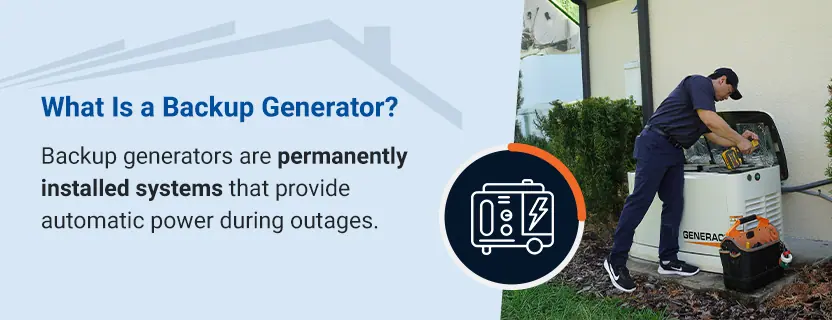
Los generadores de respaldo son sistemas instalados de forma permanente que proporcionan energía automáticamente durante los cortes de suministro eléctrico. A diferencia de las unidades portátiles, que requieren una configuración manual y una atención constante, los generadores de reserva funcionan de forma ininterrumpida en segundo plano. Por lo general, funcionan con gas natural o propano conectados directamente al suministro de combustible existente en su hogar, lo que elimina la necesidad de almacenar combustible o repostar con frecuencia.
Cuando se produce un corte de energía, un generador de reserva demuestra su utilidad al detectar la interrupción y ponerse en marcha en cuestión de segundos. El sistema alimenta los circuitos esenciales de su hogar, o toda la casa, hasta que se restablece el suministro eléctrico. Una vez restablecido el servicio, el generador se apaga automáticamente y vuelve al modo de espera.
En el corazón de cada sistema generador de reserva se encuentra el interruptor de transferencia automática. Este componente crítico supervisa continuamente el suministro eléctrico de su hogar. Cuando detecta una pérdida de energía, el interruptor de transferencia envía automáticamente una señal al generador para que se ponga en marcha.
Una vez que el generador alcanza la velocidad de funcionamiento, el interruptor de transferencia cambia sin problemas la carga eléctrica de su hogar de la red eléctrica al generador. Sus luces, electrodomésticos y sistemas esenciales continúan funcionando sin interrupción. El interruptor supervisa continuamente ambas fuentes de energía y, cuando la energía de la red eléctrica vuelve y se estabiliza, vuelve a conectar su hogar a la red eléctrica y envía una señal al generador para que se apague.
Los generadores portátiles y de reserva tienen diferentes propósitos y ofrecen ventajas distintas.
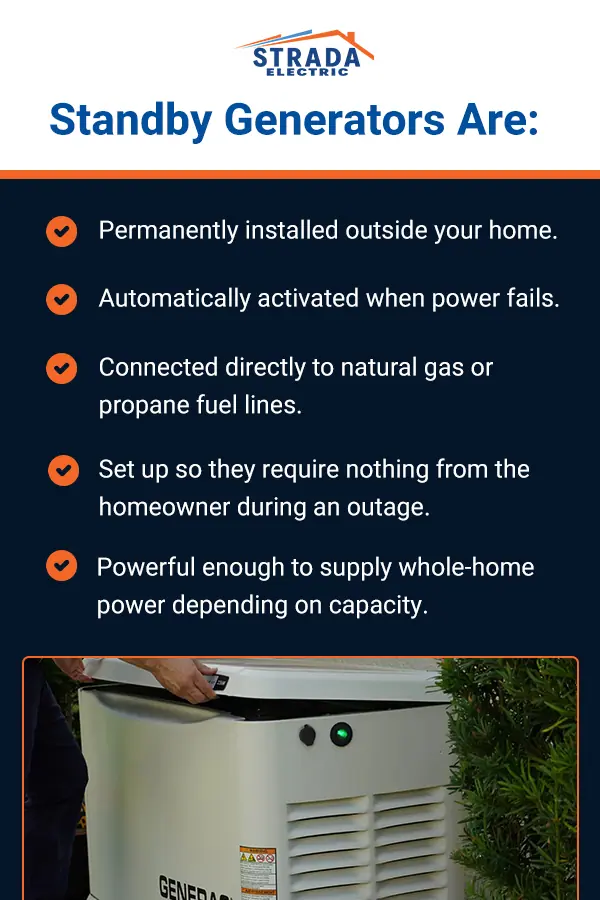
Los generadores de reserva son:
Generadores portátiles:
La respuesta corta es sí: los generadores de respaldo domésticos valen la pena para los propietarios que se enfrentan a cortes frecuentes, tienen dependencias médicas o quieren protegerse contra daños costosos. En lugar de considerar un generador como un lujo, es mejor entenderlo como una inversión en seguridad, comodidad protección de la propiedad.
Los consumidores de electricidad sufrieron una media de 11 horas de cortes de suministro en 2024, casi el doble que la media anual de la década anterior. Algunos estados se enfrentaron a fenómenos meteorológicos extremos que dejaron a los consumidores sin electricidad durante más de 50 horas. Estos incidentes ya no son excepcionales, sino que se están convirtiendo en la nueva normalidad, a medida que el envejecimiento de las infraestructuras y los fenómenos meteorológicos extremos ponen a prueba las redes eléctricas de todo el país.
Los factores clave a tener en cuenta incluyen:
Las siguientes situaciones son aquellas en las que un generador de respaldo resulta más útil.
Los propietarios de viviendas en zonas propensas a huracanes, tormentas de hielo y condiciones meteorológicas adversas se enfrentan a un mayor riesgo de sufrir cortes prolongados de electricidad. Las redes eléctricas obsoletas de muchas regiones tienen dificultades para satisfacer la demanda, lo que provoca interrupciones más frecuentes del servicio. Las zonas rurales suelen sufrir tiempos de restablecimiento más largos, ya que las empresas de servicios públicos dan prioridad a los barrios más densamente poblados.
Cuando se vive en una zona de alto riesgo, es imprescindible contar con un generador de reserva. Un enfoque proactivo de la seguridad energética protege tanto de las molestias como de los posibles peligros, garantizando que su hogar siga siendo un refugio incluso cuando se produce un corte de electricidad.
Para las familias con dependencias médicas, los cortes de energía pueden poner en peligro la vida. Los equipos críticos que requieren energía ininterrumpida incluyen:
Los equipos de salvamento no pueden esperar a que las empresas de servicios públicos restablezcan el servicio. Vale la pena invertir en un generador para toda la casa, ya que garantiza que los dispositivos médicos y los aparatos de refrigeración sigan funcionando independientemente del tiempo que dure el corte de electricidad, lo que proporciona un apoyo fundamental cuando más se necesita y protege la salud y la seguridad de su familia.
La pérdida de productividad se traduce directamente en una pérdida de ingresos para los trabajadores remotos y los propietarios de negocios desde casa. Las videollamadas, la conexión a Internet y los equipos informáticos dependen de un suministro eléctrico fiable. Perder reuniones importantes, no cumplir con los plazos de los clientes o perder el acceso a archivos críticos durante un corte de suministro puede dañar las relaciones profesionales y los ingresos.
Un generador de reserva mantiene tu oficina en casa totalmente operativa, lo que garantiza que nunca pierdas trabajo debido a circunstancias ajenas a tu control.
El calor extremo pone a los miembros vulnerables de la familia en riesgo de sufrir enfermedades relacionadas con el calor cuando falla el aire acondicionado. Los familiares mayores, los niños pequeños y las personas con determinadas afecciones médicas dependen del control de la temperatura para su seguridad.
El frío extremo puede poner en peligro su plomería al provocar la rotura de tuberías, lo que conlleva costosas reparaciones y daños materiales importantes. Un generador fiable puede mantener su sistema de calefacción en funcionamiento y sus tuberías a salvo.
Estar preparado para la temporada de tormentas significa tener una fuente de energía de respaldo lista antes de que llegue el mal tiempo. Por lo tanto, al considerar si vale la pena instalar un generador para toda la casa, tenga en cuenta que este brinda la protección que su familia necesita cuando la madre naturaleza ataca.
Para seleccionar el generador de respaldo adecuado, es necesario considerar cuidadosamente varios factores clave.
Comience por identificar si necesita cobertura de circuitos esenciales o energía para toda la casa. Los circuitos críticos suelen incluir el sistema de climatización, el frigorífico, la bomba de sumidero, la bomba de pozo y los equipos médicos, es decir, las necesidades absolutas que protegen la salud, la seguridad y la propiedad. La cobertura para toda la casa alimenta todos los circuitos y electrodomésticos, por lo que podrá mantener su estilo de vida habitual durante los cortes de suministro sin ningún tipo de inconveniente.
Se recomienda encarecidamente realizar una evaluación profesional. Los técnicos experimentados pueden evaluar sus necesidades específicas de energía, revisar su cuadro eléctrico y recomendarle el tamaño adecuado de generador, medido en kilovatios (kW), para satisfacer las necesidades de su hogar.
A continuación, compararemos los tipos de combustible, incluyendo los generadores de reserva de gas natural frente a los de propano. Los generadores de gas natural se conectan a la red de suministro existente, por lo que no requieren almacenamiento de combustible y proporcionan un suministro continuo siempre que la red de gas siga funcionando. Este tipo de combustible suele costos y ofrece la máxima comodidad, ya que nunca es necesario repostar ni controlar los niveles del depósito.
Los generadores de propano utilizan combustible almacenado en tanques ubicados en su propiedad. El propano se quema de forma más limpia que otras fuentes de combustible, como el diésel, y funciona bien en zonas sin servicio de gas natural. Sin embargo, necesitará una capacidad de tanque adecuada para hacer frente a cortes prolongados, y los tanques requieren rellenado periódico.
Los generadores diésel ofrecen una excelente eficiencia energética, pero son menos habituales en aplicaciones residenciales. Su elección dependerá en última instancia de la disponibilidad de combustible en su zona y de la infraestructura ya existente en su propiedad.
Se requiere una instalación profesional para los generadores de reserva. El proceso implica trabajos eléctricos para conectar el generador y el interruptor de transferencia al panel eléctrico de su hogar, conexiones de la línea de combustible a su suministro de gas natural o propano, la obtención de los permisos necesarios y la instalación de una base de hormigón que proporcione una superficie estable y nivelada para el generador.
El interruptor de transferencia es un componente esencial que permite el funcionamiento automático. Una instalación adecuada también requiere cumplir con los requisitos de espacio libre de seguridad, especialmente en lo que respecta a la ventilación de escape para evitar la acumulación de monóxido de carbono. Los generadores deben colocarse al aire libre, a una distancia segura de ventanas, puertas y rejillas de ventilación, para evitar que los gases peligrosos entren en su hogar.
Las normas de construcción locales y los requisitos para obtener permisos varían según la ubicación. Seguir las mejores prácticas garantiza que la instalación de su generador cumpla con todas las normas de seguridad y funcionamiento para una fiabilidad a largo plazo.
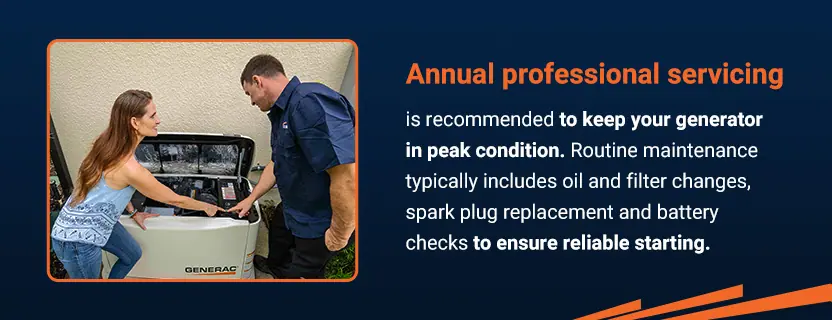
Se recomienda realizar un mantenimiento profesional anual para mantener su generador en óptimas condiciones. El mantenimiento rutinario suele incluir cambios de aceite y filtros, sustitución de bujías y comprobación de la batería para garantizar un arranque fiable. La mayoría de los generadores de reserva realizan ciclos de autocomprobación automáticos, normalmente semanales, para verificar que todos los sistemas funcionan correctamente sin intervención del propietario.
Los generadores modernos simplifican el seguimiento y la supervisión del mantenimiento. Estas funciones de autodiagnóstico le avisan de posibles problemas antes de que se conviertan en problemas, lo que maximiza la fiabilidad de su sistema de energía de respaldo cuando más lo necesita.
costo instalación costo un generador de reserva depende de factores como sus necesidades, su presupuesto y la complejidad de la instalación. Al evaluar si vale la pena instalar un generador para toda la casa, tenga en cuenta que la cobertura requiere unidades más grandes y costosas que los sistemas que solo alimentan los circuitos esenciales. El tipo de combustible influye costos : una conexión de gas natural puede implicar un gasto inicial menor si ya dispone de servicio de gas, mientras que los sistemas de propano requieren la instalación de un tanque y la compra continua de combustible.
La complejidad de la instalación varía según la propiedad. Las viviendas con acceso difícil, tuberías de combustible más largas o configuraciones complejas de paneles eléctricos pueden incurrir en costos de instalación más elevados. Los gastos continuos incluyen el consumo de combustible durante los cortes de energía y el mantenimiento anual para mantener el generador listo para funcionar. Si bien estos costos a lo largo de la vida útil del generador, suelen ser modestos en comparación con la protección que brinda el sistema.
costos los equipos costos generadores de reserva varían según el tamaño, y la capacidad, medida en kilovatios, determina la parte de la vivienda que la unidad puede alimentar. Los generadores más grandes, capaces de cubrir toda la vivienda, costo que las unidades más pequeñas, diseñadas solo para los circuitos esenciales.
costos de instalación de un generador para toda la casa costos el trabajo eléctrico profesional, un interruptor de transferencia automática, la instalación de la línea de combustible, una plataforma de hormigón y los permisos necesarios. Si bien estos gastos se suman a la inversión inicial, garantizan que su sistema funcione de manera segura y confiable durante muchos años.
Considere la compra de un generador como una protección contra daños costosos, en lugar de simplemente una mejora para mayor comodidad. Piense en lo que costo una tubería reventada, un sótano inundado o miles de dólares en comida en mal estado costo un corte prolongado del suministro eléctrico. La tranquilidad y la seguridad que un generador proporciona a su familia suelen ser invaluables, especialmente durante emergencias, cuando más se necesita una fuente de energía de respaldo.
Cuando esté listo para proteger su hogar con una solución de energía de respaldo confiable, trabajar con profesionales experimentados marca la diferencia. Strada Services se especializa en la instalación, reparación y mantenimiento de generadores de reserva para propiedades residenciales y comerciales en toda Florida y el sureste.
Como distribuidor autorizado de Generac, instalamos exclusivamente generadores de respaldo residenciales Generac, la marca número uno en ventas de sistemas de respaldo para el hogar en el país. Lo que hace que los generadores para toda la casa de Generac merezcan la pena es que están fabricados para ofrecer fiabilidad y vienen equipados con el sistema de monitorización Mobile Link™, que le permite comprobar el estado de su sistema de forma remota desde cualquier parte del mundo. Esta tecnología de bajo mantenimiento le ofrece la tranquilidad de saber que su generador estará listo cuando más lo necesite y que contará con la cobertura de la garantía si la necesita.
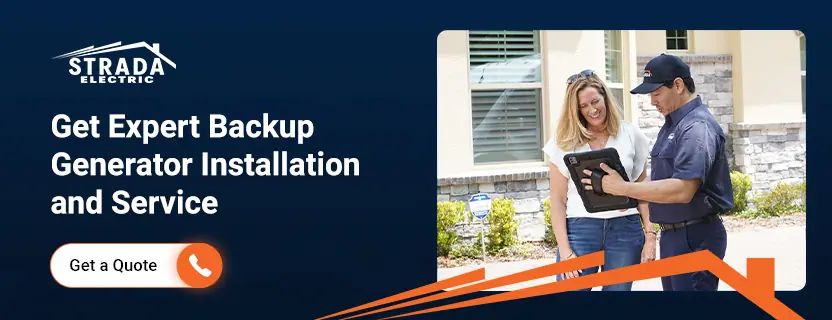
Somos una empresa familiar desde 2003 y hemos construido nuestra reputación basándonos en el respeto a nuestros clientes y en ofrecer un servicio excepcional. Cuando nos elige para satisfacer sus necesidades de generadores de respaldo, se beneficia de:
Pide cita hoy mismo para hablar sobre tus necesidades de energía de emergencia y obtener un presupuesto gratuito, rápido y sencillo para un sistema de generadores Generac adaptado a tu hogar.

Joe Strada, propietario de Strada Electric, Security & Air Conditioning, empezó a trabajar a la temprana edad de 14 años. Nunca ha ido a la universidad, pero se ha pasado la vida dedicando su tiempo y energía a su oficio y a ofrecer servicios de alta calidad a sus clientes. A los 19 años, Joe empezó a trabajar en una conocida empresa de aire acondicionado y a desarrollar su compromiso con la excelencia. Tiene certificaciones estatales en electricidad, plomería, aire acondicionado, construcción residencial y contratación general. Durante sus años de formación y experiencia, Joe notó una sincera necesidad de un contratista eléctrico confiable en la Florida que encarnaba la misma dedicación al servicio al cliente en la que él creía. En 2003, Joe co-fundó Strada Electric, Security & Air Conditioning. Desde entonces, la empresa se ha dedicado a proporcionar tranquilidad a los clientes. Ofrecemos soluciones expertas en electricidad, seguridad y aire acondicionado para hogares y empresas, aprovechando nuestra experiencia para ofrecer un servicio profesional y receptivo con fiabilidad y respeto.


 Pagar en línea