It’s not always easy to distinguish between random noise and a potential hazard that requires attention. When it comes to knowing how to reduce noise from your heating, ventilation and air conditioning (HVAC) system, this can be a big challenge.
A noisy HVAC unit may be a sign that something needs to be repaired as soon as possible. To help you understand the difference between a mildly annoying noise in the background and a potential emergency situation, here’s what you’ll need to know about how to reduce HVAC noise.
While an air conditioner is loud when running inside your house, there’s a difference between the standard HVAC system running noise and a noise that should be considered a sign of a deeper issue. Understanding why your HVAC system is loud in the house requires knowledge of specific sounds to diagnose the primary issue.
Some common reasons why your HVAC is so loud in the house are listed below:
The noises your HVAC unit makes are usually key indicators of potential internal damage, debris or dirty coils, all of which are important factors in considering the best way to maintain your air conditioner units and reduce noise.
Dealing with excessive noise can be a constant distraction that hinders your ability to relax at home. It can also be a potential issue that may lead to more significant problems in the long term. Knowing how to reduce noise from your HVAC system is a crucial step in mitigating these issues.
Below are some safe and non-technical fixes you can try when looking at how to reduce HVAC noise.
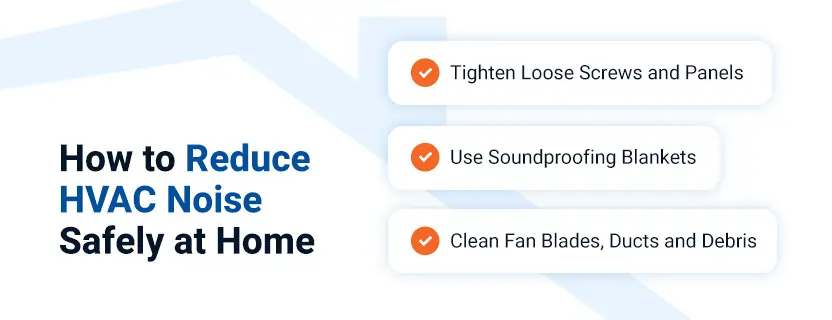
The vibrations of a household HVAC can cause screws to loosen, creating panels that make excessive rattling sounds. A screwdriver is a fast and effective way to tighten these screws, reducing the noise. If you need to know how to reduce noise from an outside air conditioner, simply inspect the exterior panels of your unit and carefully tighten any required screws.
For noises you can hear from inside your home, inspect the ductwork to check for any loose register covers or panels. All screws should be securely in place but not overtightened to avoid damaging the threads.
Also known as compressor wraps, these are insulated covers that are wrapped around the AC to soften vibrations and absorb sound. When exploring how to reduce AC compressor noise, soundproof blankets are a popular choice for dampening excess noise without causing your unit to overheat.
Most manufacturer-approved options will be custom-sized for easy installation.
A simple cleaning of air ducts, fan blades and other accumulated debris can be an effective way of reducing noise. Taking the time to get rid of any twigs, dirt and random materials can help to determine whether your HVAC noises are an easy fix or a sign of something that needs a professional.
Outdoor air entering a building through mechanical means can come with its share of potential noise issues. Knowing how to reduce the air conditioner noises outside your home can be a vital part of preventing further, more expensive issues down the line. It also prevents more personal problems, like complaints from neighbors about noise.
A common way to reduce these noise risks is to install shrubbery or a fence around the unit. It will need to be at least 3 feet away from the unit to ensure airflow is efficient and that there’s less chance of overheating. The idea of creating this area around your unit helps to deflect sound waves and soften the noises.
An air conditioner that’s loud when running inside your home isn’t something that should be ignored. With poor indoor ventilation linked with respiratory illness, the quality of indoor air is extremely important. Any potential sign of a fault should be checked as soon as possible.
If you experience any of the below noises, it’s always a good idea to consult a professional:
While no one wants to assume the worst, it’s important to be vigilant and ensure you’re not putting yourself or others at risk.
Some noise is a natural outcome of having an HVAC system in place. However, knowing how to reduce noise from your HVAC system is something every homeowner should be aware of. Not only will it help you to implement simple but effective home maintenance methods to get the most life out of your systems, but it also offers guidance on when you may need to rely on a professional AC maintenance team.
Whether you’re looking for a more modern, reliable unit that’s quieter and more efficient or after a repair of an existing HVAC system, it’s always vital to work with an experienced company that cares about the safety and security of your home.
Are you looking at how to reduce noise from your HVAC system? Contact Strada Air Conditioning & Heating today and discover why we’ve been providing peace of mind to families for over 20 years.

Joe Strada, owner of Strada Electric, Security & Air Conditioning, started working at the young age of 14. He’s never attended college, but he has spent his life dedicating his time and energy to his trade and providing high-quality services to his customers. At 19, Joe started working at a well-known air conditioning company and developing his commitment to excellence. He has state certifications in electric, plumbing, air conditioning, residential building and general contracting. During his years of training and experience, Joe noticed a sincere need for a dependable electrical contractor in Florida who embodied the same dedication to customer service in which he believed. In 2003, Joe co-founded Strada Electric, Security & Air Conditioning. Since then, the company has been in the business of providing peace of mind to customers. We offer expert electric, security and air conditioning solutions for homes and businesses, leveraging our experience to deliver professional and responsive service with reliability and respect.