Family-Owned Since 2003
A well-maintained furnace is like a perfectly tuned instrument, or the heartbeat of your home. It keeps your loved ones warm, disperses quality air into your living space and runs efficiently in the background while you go about your day. When properly looked after, your furnace can provide long-term comfort and warmth throughout your home. However, like any vital part of your home, it needs the right amount of care and maintenance to ensure it runs efficiently.
But why is having a clean furnace that’s regularly maintained so important? And how can you implement some simple but effective cleaning steps to keep it working at its absolute best? In this guide to cleaning your home furnace, we’ll let you know what areas of your system should have regular care and attention. You’ll also learn about which parts of your furnace should be left only to the professionals to take care of.
To keep you and your loved ones safe, here’s everything you need to know about maintaining a safe and efficient home furnace system.
Knowing how to clean a home furnace safely and when to call in an HVAC professional is an important part of good house maintenance. A clean furnace that operates at its optimal efficiency can offer a range of benefits to your home. Aside from cleanliness, it can also benefit the overall health of your family members and teach you to spot minor issues before they become larger, more expensive ones.
Cleaning a furnace regularly has a positive effect on your home environment in the following areas:
A well-maintained home furnace system functions perfectly. A clogged system can’t run at its full potential without regular cleaning. Poorly maintained home furnaces are also more likely to accumulate dust and debris, which makes the system work even harder to overcome them.
Regular furnace cleaning for homeowners means freeing up any potential blockages and giving your furnace the chance to “breathe” without any obstructions.
The combustible elements of a home furnace can lead to potential catastrophic event hazards without proper maintenance. And with over 2,000 U.S. home fatalities reported in 2025 related to combustible elements, reducing the risks of a catastrophic event in your home is essential.
A neglected furnace can accumulate typical household debris, such as pet hair and dust. A dirty furnace will continue to collect these elements, which can easily ignite and increase the potential for a hazardous event.
A home furnace that has a regular maintenance and cleaning schedule can increase the overall lifespan of your system. With a combination of home maintenance and occasional professional servicing, you can potentially add several years to the life of your furnace.
Some other areas where a clean furnace can save your household money in the long-term include:
You can easily prevent these risks with a little attention to detail and regular inspections.
Home furnace equipment needs to be properly cleaned and ventilated to reduce the risk of carbon monoxide, which is a significant risk in houses with poorly maintained furnaces and dirty components. A clean and well-maintained furnace ensures that carbon monoxide is vented safely and without risk to your loved ones.
A cracked furnace heat exchanger can lead to carbon monoxide leaks in the home. Carbon monoxide is naturally odorless and colorless, making it potentially lethal. While cleaning your home furnace is an important part of reducing these risks, preventive measures like installing carbon monoxide alarms and regularly changing their batteries as part of your checks are also essential.
A clean furnace and filter reduce the levels of dust and indoor pollutants, preventing allergens from building up. A home furnace filter is the first line of defense that stops mold spores, pollen and dust from being spread through the ducts of your home and affecting your family.
Your home’s indoor air quality can play a pivotal role in your family’s well-being. IAQ can contribute to better concentration and overall quality of sleep in your household. IAQ is critical during the winter, when you are less likely to ventilate your house naturally by opening windows.
Furnace components such as ducts and cooling coils can accumulate moisture. If neglected, this moisture will become a breeding ground for mold or indoor bacteria to develop, contaminating the system and spreading through your house with the circulated air.
In some severe cases, this mold can lead to respiratory issues and extreme allergic reactions if left to continue growing.
Before learning how to clean a home furnace safely, you need to know the main components of your furnace. While each furnace may vary slightly depending on the age, size and make of your furnace, each one will typically include the following components:
Keeping this information in mind can help you to regularly clean your home surface without risking injury and danger to yourself or others.
You can handle some elements of cleaning a furnace yourself. Carefully implementing these cleaning methods can be a significant step in keeping your home safe, warm and flowing with the best quality air. Following this simple furnace cleaning guide for homeowners will keep your living space running efficiently.
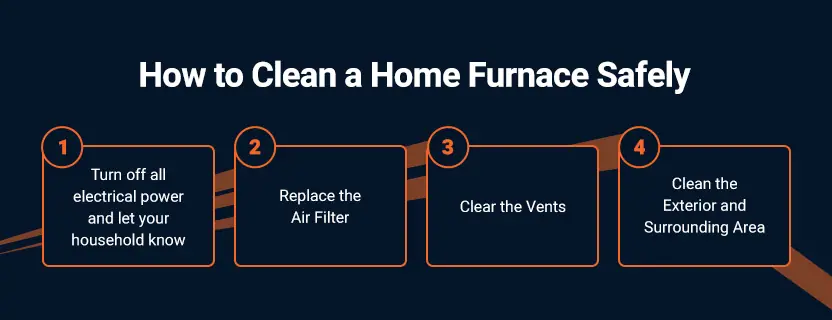
The most important thing about learning how to clean a home furnace safely is to turn off all electrical power. You must also shut off the gas supply to the furnace before performing any cleaning. Finally, tell anyone in your home what you’re doing to prevent these from being turned back on by mistake.
Once you’ve turned off the power and gas, you can start to clean your furnace without putting yourself or others in danger.
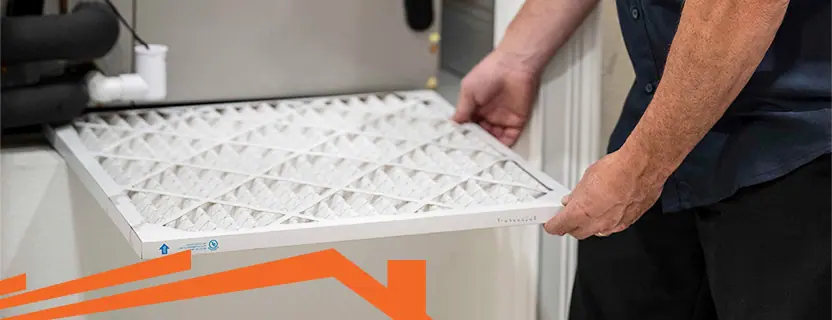
Replace your furnace air filter at least once every three months, and never less than once a year. The filter will typically be in the blower compartment of your furnace. If this isn’t the case, check your furnace manual for its location, as it can vary depending on filter types.
Carefully remove your air filter, making note of the airflow direction, which should be clearly marked on its frame. Then insert the new filter and make sure it faces the right direction. Finally, replace the filter cover or shut the blower compartment.
Vents that aren’t regularly cleaned will restrict the airflow of your home furnace and circulate poor-quality air with allergens. Remove any registers and vacuum the inside of vents and ducts by reaching as far as you can down them to get rid of any dust, debris or pet hair.
Wipe down registers with a warm, damp cloth before putting them back.
Carefully inspect the exterior and surrounding areas of your furnace. Aim to create a 3-foot radius around the outside of the furnace that’s clean, clear of obstacles and free of flammable materials. As a safety measure, check for any tripping hazards or potential cracks on the outside of your furnace.
Cracks can lead to possible air leaks that impact the energy efficiency of your home and leak harmful odorless gas into your home. A professional should deal with any exterior damage found during these checks.
You should ideally find a happy medium between small and simple cleaning and knowing when you should leave it to a professional. The key to maintaining your furnace is to create an easy-to-follow schedule that you can adhere to.
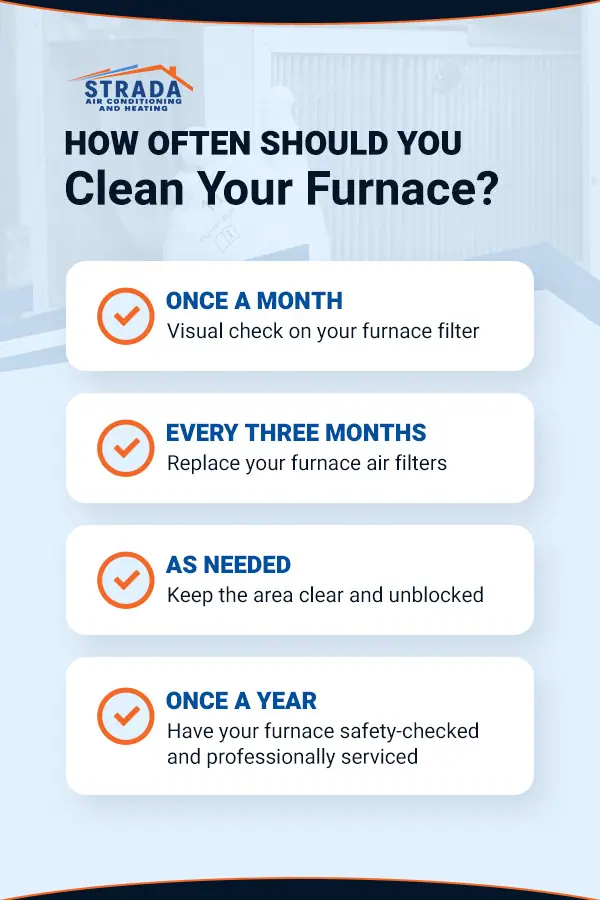
The following best practices can contribute to a more efficient and clean home furnace:
It’s important to understand where DIY cleaning and professional services begin and end. Some areas of maintenance aren’t safe for you to do alone, so you’ll need to arrange for a professional to clean and inspect your furnace.
It’s dangerous to attempt to clean certain furnace parts without the help of a professional furnace maintenance service. For the sake of your own safety, the safety of your loved ones and the cleanliness of your air quality, a certified maintenance technician should always complete the following tasks:
Keeping these areas of furnace maintenance strictly professional only will help you to keep your home warm, efficient and running safely.
Understanding when there’s a potential serious problem enables you to react safely and resolve it quickly. It can be the key to knowing when to contact a professional to take care of your furnace issue as soon as possible.
Some common signs of serious problems with your home furnace include:
Sudden spikes in heating bills without any increase in use can also be a common sign of some potential internal issues with your home furnace.
Any furnace cleaning guide for homeowners should focus on what matters most — safety and the longevity of your system. Safety should be the priority in any home and in your choice of expert service.
Scheduling your professional furnace maintenance with Strada Services means having peace of mind that your home is safe and working at its optimum efficiency. We’ve been helping families stay warm since 2003. As the trusted local expert in electrical, security, plumbing and air conditioning needs, our team members provide furnace tuneups and inspections.
Contact us today to learn more about what we can do for you.

 Pay Online