Family-Owned Since 2003
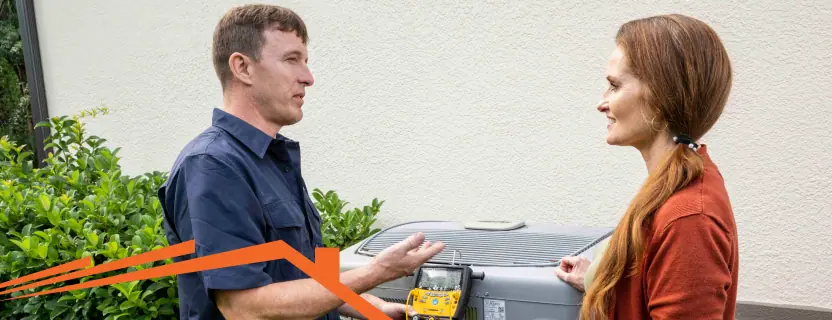
Heating, ventilation and air conditioning (HVAC) systems and indoor air quality (IAQ) share a unique relationship. They work well together, and they potentially fail together. A well-functioning system improves the overall health of your home. A neglected system does the exact opposite.
A comfortable, healthy indoor environment is essential for you and your loved ones, but many factors influence indoor climate. The relationship between HVAC and indoor air quality is at the heart of these influences.
How does HVAC affect IAQ for homeowners looking to protect their families? Let’s explore how to reduce the hidden dangers of airflow in your home through a positive approach to air quality and HVAC systems.
The health of your HVAC system is a key determining factor for indoor air quality. As the “breathing apparatus” of your home, HVAC systems take in stale air and “breathe out” conditioned air. An efficient HVAC system impacts air quality in the following ways:
Understanding how HVAC systems affect indoor air quality is vital. A neglected home air system serves only to concentrate existing pollutants. Over time, this leads to unseen but important airflow issues rather than getting rid of them.
Heating and cooling systems make up almost half of the energy used in a standard home. A poorly looked-after unit can reverse all of the benefits a well-maintained system provides. Below are some of the silent but very real dangers of poor airflow:
The tight, cozy nature of modern homes offers many comforts and conveniences. However, it also means that homeowners need to improve indoor air quality with HVAC solutions to cycle out any pollutants.
Yes and no. Air conditioning does improve indoor air quality, but that’s just one important part of a wider dedication to ventilation and indoor air quality. Air conditioners remove excess moisture, reducing the likelihood of dust mite infestations. However, a home with a well-functioning AC unit isn’t necessarily a clean one.
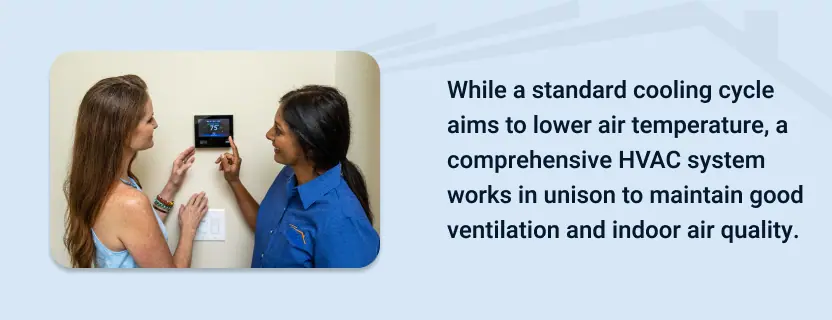
Humidity control plays a crucial part in maintaining a healthy indoor environment. While a standard cooling cycle aims to lower air temperature, a comprehensive HVAC system works in unison to maintain good ventilation and indoor air quality. Dehumidification is a natural by-product of these systems, helping reduce the risks of moisture and mold at home.
Healthy indoor air is achievable in any home. It just depends on the type of systems you have in place to help control and maintain air quality. Think of it as an opportunity to create a cohesive indoor ecosystem that removes pollutants.
The key pillars of healthy indoor air that homeowners need to be aware of are:
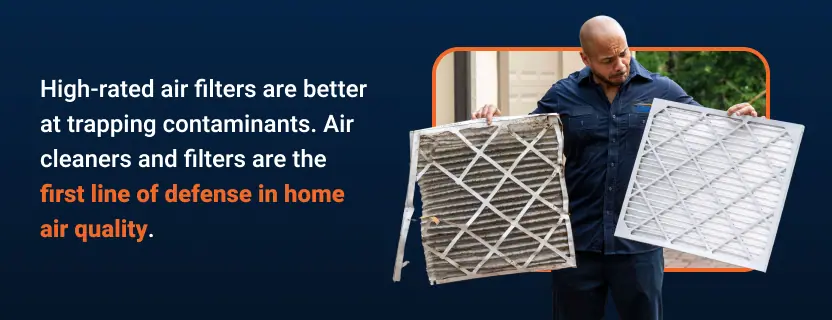
Air cleaners and filters are the first line of defense in home air quality. High-rated air filters are better at trapping contaminants. There is a wide range of HVAC filters available, each with unique features to suit the air quality needs of every home.
The available HVAC filter options will typically include:
Choosing the right filter depends on the specific needs and design of your home. Regardless of the type, your filter plays a key role in facilitating ventilation and indoor air quality.
Proper ventilation is essential for creating a healthier indoor environment. VOCs aren’t the only indoor pollutant that poses a risk. Activities like cooking and smoking, or gases like CO, radon and formaldehyde, can all be harmful if left to fester. It’s one of the many reasons indoor air should always be swapped for fresh outdoor air. Opening the windows in each room for 15-20 minutes is a good “quick-fix” way to get fresh air indoors.
This isn’t always doable depending on the weather, location and exterior activities happening outside of your home. HVAC systems protect indoor air quality all year long in the following ways:
Good ventilation ensures there’s a steady stream of indoor air, making your home comfortable and free of contaminants.
Humidity levels can affect the concentration of indoor air pollutants in a home. Maintaining appropriate humidity levels reduces allergen risks and helps prevent mold growth. The ideal indoor humidity range is between 30% and 50%, as recommended by the Environmental Protection Agency (EPA). You can easily monitor these levels using a moisture or humidity gauge.
Certain areas of your home, like basements, kitchens and bathrooms, will be more prone to moisture. Regularly using exhaust fans and immediately fixing any noticeable leaks can help your HVAC system function at its best.
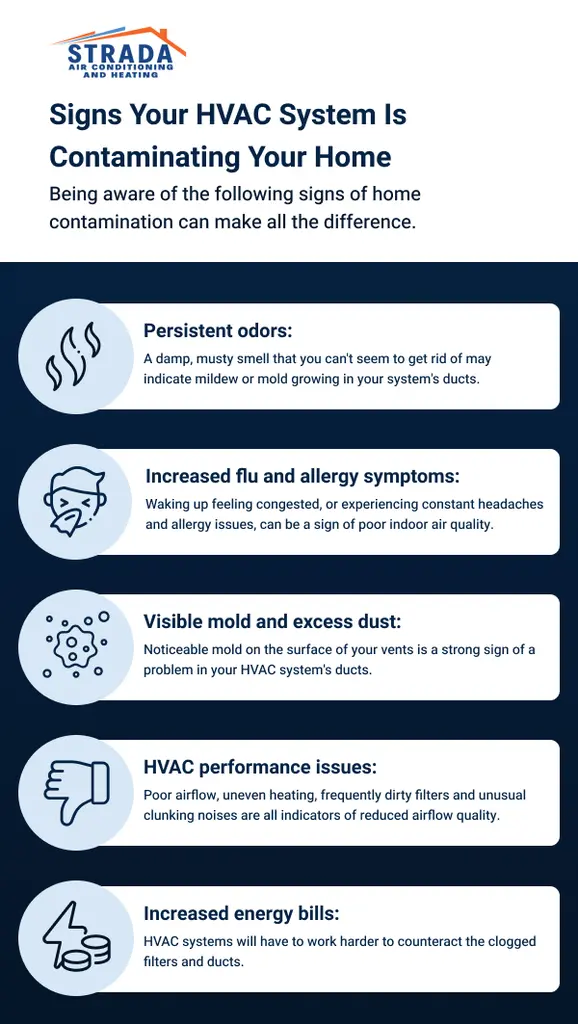
You can improve indoor air quality with HVAC systems, but it’s important to spot the signs of a poorly maintained system. Being aware of the following signs of home contamination can make all the difference. Here are the key indicators that your HVAC system isn’t removing your household air pollutants:
The above problems should be addressed with an HVAC inspection by a qualified professional. Otherwise, they can quickly escalate. Over time, this may lead to vermin infestations, increased mold growth and respiratory issues.
Optimal HVAC and indoor air quality require a maintenance plan. Having one in place creates greater system-wide efficiency and keeps your lungs breathing the best possible air. No one expects you to be an expert or to put yourself in danger. You just need to learn some essential DIY maintenance tips and know when it’s best to call in a professional.
Here’s how a combination of regular care and professional support can create the ideal maintenance routine:
Regularly replacing your air filters is a simple but effective part of maintenance. It’s one of the best ways to give your system “breathing room” to function. Removing the clogged particles and dust ensures your living space gets only clean, fresh air. Check filters monthly, and replace them every three months to maintain proper airflow. Try to remove dust buildup from all vents, ducts and registers at least monthly.
Outdoor units should be kept free from random dirt, leaves and other debris. This means keeping the exterior of the unit tidy to prevent contamination and blockages. Any nearby plants should be kept at least 18 inches away from the unit. You should also plan to schedule an annual inspection for safety checks.
Thermostats will need to be checked for accuracy. Set aside some time to perform a quick “once-over” look every few weeks. It’s also a good opportunity to consider investing in a programmable thermostat for fast, accurate readings.
Seasonal factors can affect how your HVAC system performs, especially if it hasn’t been serviced for a long time. Check your furnace for damage and wear before peak use season. Do regular checks for common areas of excess moisture during summer seasons.
These small extra efforts can make a big difference. They can also help extend the lifespan of your system, contributing to long-term savings on costly repairs.
A more detailed, focused inspection of your HVAC system can save you a small fortune. It can also prevent serious health problems for you and your family members. Below are the most important biannual checks and cleaning tasks to keep track of:
Due to potential dangers, these checks require proper precautions. In most cases, it’s essential to hire a trusted and experienced professional to handle them for you.
The relationship between HVAC and indoor air quality shouldn’t be underestimated, and both directly contribute to your family’s health, safety and well-being.
Strada Air Conditioning & Heating is a family-owned business that provides support, expertise and peace of mind to homeowners. Founded in 2003, we’ve been maximizing comfort while minimizing risks for families for over 20 years.
We offer a wide range of specialties and services, helping ensure your home feels cozy, comfortable and safe throughout the year. In addition to HVAC installation, repair and maintenance services, we offer indoor air quality solutions like air purification and humidification systems. As proof of our commitment to quality, we offer a 10-year labor warranty on our services.
Are you looking to improve your home’s indoor air quality? Explore our service areas and schedule an evaluation or maintenance visit today.

Joe Strada, owner of Strada Electric, Security & Air Conditioning, started working at the young age of 14. He’s never attended college, but he has spent his life dedicating his time and energy to his trade and providing high-quality services to his customers. At 19, Joe started working at a well-known air conditioning company and developing his commitment to excellence. He has state certifications in electric, plumbing, air conditioning, residential building and general contracting. During his years of training and experience, Joe noticed a sincere need for a dependable electrical contractor in Florida who embodied the same dedication to customer service in which he believed. In 2003, Joe co-founded Strada Electric, Security & Air Conditioning. Since then, the company has been in the business of providing peace of mind to customers. We offer expert electric, security and air conditioning solutions for homes and businesses, leveraging our experience to deliver professional and responsive service with reliability and respect.

 Pay Online