Family-Owned Since 2003
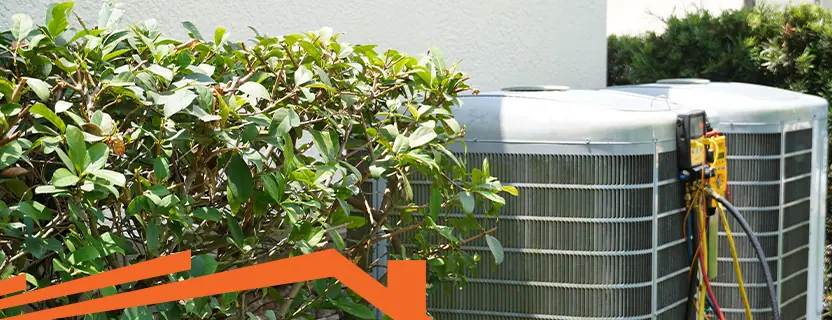
If you’re a homeowner in the Southern U.S. watching your AC bills climb every summer, you’re not alone. Most people don’t realize their landscaping choices could be costing hundreds of dollars a year in wasted energy. The plants, groundcover and layout around your outdoor HVAC unit play a major role in how efficiently your system runs and how long it lasts. A few smart adjustments to your yard can lower bills, reduce equipment wear and help you avoid costly repairs.
Your air conditioner’s outdoor condenser unit has one critical job — to release the heat it pulls from your home. When airflow around the condenser is restricted or the surrounding area traps heat, the system has to work significantly harder. That extra strain translates to higher energy consumption, more frequent breakdowns and a shorter equipment lifespan.
The harder your system works, the more stress it places on critical components like the compressor and fan motor. Over time, poor landscaping decisions can force you to replace your air conditioner early, cutting years off what should have been a long-term investment.
Homeowners often make landscaping decisions with curb appeal in mind, not realizing the negative impact on HVAC performance. These common mistakes may seem harmless, but they lead to real problems. If you want to learn more about factors impacting HVAC system efficiency, several other considerations beyond landscaping play a role.
Shrubs around an AC unit can reduce efficiency when positioned incorrectly. When shrubs are too close to your condenser or fences built nearby, they form a barrier that “suffocates” the unit. Your air conditioner needs open space to pull in air and expel heat. When shrubs around your AC unit block airflow, the system can’t remove heat efficiently, leading to longer cycles and higher energy consumption.
Trees and plants that shed leaves, seeds or grass clippings pose another threat. These materials are sucked into the condenser fins, forming a dense layer that traps heat. Over time, this debris buildup causes overheating and forces the system to work harder than it should. Knowing how to protect your AC condenser from leaves and debris starts with selecting and placing plants.
Homeowners often surround HVAC units with rock, gravel or concrete pads, thinking these materials require minimal upkeep. The problem? These surfaces absorb and radiate heat, raising the temperature of the air the condenser is trying to cool. According to the University of Florida’s IFAS Extension, cooler materials like organic mulch or bark keep yards cooler. Using these materials around your HVAC unit prevents the surrounding area from becoming a heat trap, helping the system operate more efficiently.
Dense shrubs or thorny bushes around your condenser might look attractive, but they make maintenance and repairs difficult. When you obstruct access, routine maintenance becomes difficult, time-consuming and even dangerous for service professionals. Most major HVAC manufacturers recommend at least 2 feet of clearance around all sides of the unit and 5 feet above it, but you should always refer to the manual for your unit to find the exact spacing requirements.
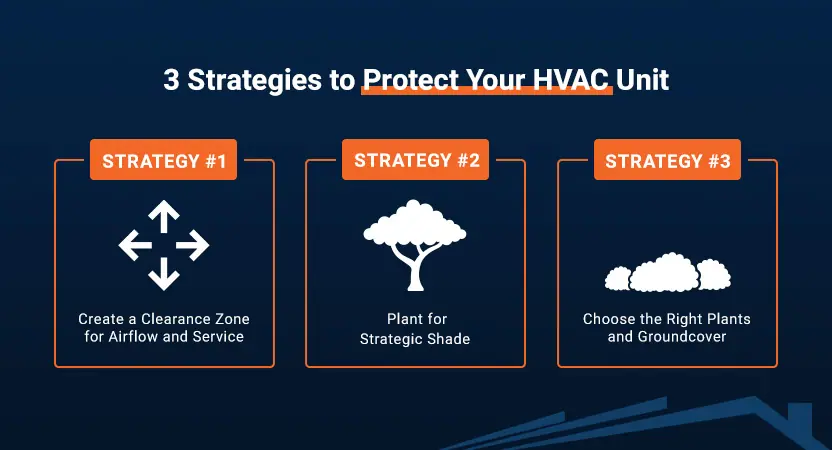
Now that you know what to avoid, here are three strategies you can implement to support your HVAC system instead of working against it.
The best landscaping around an outdoor HVAC unit for airflow starts with proper spacing. Maintain a clearance of at least two to three feet on all sides of your condenser. This gives the system the breathing room it needs to function efficiently. Most experts recommend keeping plants at least two to three feet away from the unit as a safe minimum distance. Keep the path to your unit clear as well so service professionals can easily reach it with tools and equipment.
Shading your air conditioning unit directly isn’t as effective as you think. The real payoff comes from shading your house itself. The U.S. Department of Energy states that if you position a tree carefully, it can save a typical household up to 25% of its energy use.
Deciduous trees planted on the east and west sides of your home block the sun during the hottest parts of the day, reducing the amount of heat your AC has to remove. Does shading an AC unit lower your electric bill? Yes, but shading the home has a far greater impact on overall energy costs.
Select plants that don’t shed excessively or require frequent trimming. Native plants are often the best choice because they’re adapted to the climate and need less upkeep.
For groundcover, organic mulch or bark is far superior to rock or gravel. These materials stay cooler and don’t radiate heat back toward the condenser. They also improve soil health and retain moisture, which benefits your entire landscape. The University of Florida’s IFAS Extension offers excellent guidance on plant selection and landscaping practices that support energy efficiency.
These landscaping strategies can prevent future problems and improve your system’s efficiency, but they can’t fix issues that have already developed. Here’s when you need professional maintenance:
Smart landscaping is an important step, but it’s only part of the equation. To get the most out of your air conditioning system, you need a comprehensive maintenance plan that keeps equipment clean, efficient and reliable year-round. Strada Air Conditioning & Heating provides expert maintenance services that protect your investment and give you peace of mind. From thorough coil cleaning to system diagnostics, our team ensures your HVAC system is ready to handle every season. We’ll check refrigerant levels, inspect electrical connections, clean drain lines and identify potential problems before they become costly emergencies.
Whether you need routine maintenance or a full range of air conditioning and heating services, we are here to help. Schedule your maintenance appointment today and start saving on your energy bills.

Joe Strada, owner of Strada Electric, Security & Air Conditioning, started working at the young age of 14. He’s never attended college, but he has spent his life dedicating his time and energy to his trade and providing high-quality services to his customers. At 19, Joe started working at a well-known air conditioning company and developing his commitment to excellence. He has state certifications in electric, plumbing, air conditioning, residential building and general contracting. During his years of training and experience, Joe noticed a sincere need for a dependable electrical contractor in Florida who embodied the same dedication to customer service in which he believed. In 2003, Joe co-founded Strada Electric, Security & Air Conditioning. Since then, the company has been in the business of providing peace of mind to customers. We offer expert electric, security and air conditioning solutions for homes and businesses, leveraging our experience to deliver professional and responsive service with reliability and respect.



 Pay Online