Family-Owned Since 2003
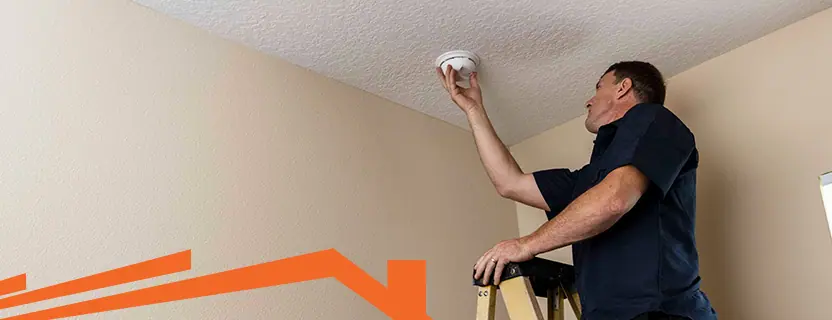
Your smoke and carbon monoxide (CO) detectors are two of the most important safety devices inside your home. When they’re working properly, they give you critical seconds or even minutes to protect your family during an emergency. These devices can’t protect you if they’re not functioning correctly. Regular testing ensures your alarms will sound when you require them most. In this guide, you’ll learn exactly how often to test your detectors, how to perform those tests correctly and when it’s time to call in a professional for help.
Smoke alarms are your first warning when fire breaks out. Fires produce toxic smoke and gases long before you feel heat, and these dangers are especially deadly while you’re sleeping. Your alarm gives you precious time to evacuate safely.
Carbon monoxide is often called the invisible killer because it is completely colorless and odorless. You can’t see it, smell it or taste it. Some sources of this gas indoors include gas furnaces, water heaters, fireplaces and any appliances that burn fuel. Early CO poisoning mimics the flu, with symptoms like headache, dizziness and nausea, making it easy to dismiss. Without a working CO detector, you might not realize you’re in danger until it’s too late.
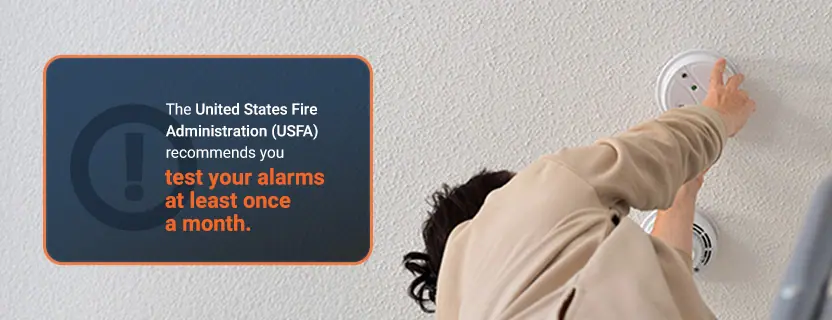
The United States Fire Administration (USFA) recommends you test your alarms at least once a month. Monthly testing confirms that your batteries are still charged and your sensors are operational.
If your detectors use replaceable batteries, rather than sealed 10-year units, replace them at least once a year. Many homeowners choose to change batteries when daylight saving time begins or ends as an easy reminder. Regular testing and fresh batteries ensure your alarms are ready to protect your family 24/7.
Testing your smoke alarm takes less than a minute. Follow these steps:
If the alarm doesn’t sound or the beep is weak, replace the battery immediately and test again. If it still doesn’t work, the unit needs replacement.
Testing a CO detector follows the same basic process as testing a smoke alarm. Press your detector’s test button and hold it until you hear the alarm sound. This sound confirms the unit has power and the internal horn is functioning properly.
It’s important to understand that pressing the test button does not expose the sensor to actual carbon monoxide. You’re simply verifying that the device can sound an alarm. The test doesn’t confirm whether the sensor can still detect CO gas, which is why replacing your detector according to its recommended lifespan is critical. Monthly testing combined with timely replacement gives you the best protection.
A chirping detector is trying to tell you something. If your smoke detector is chirping after a battery change, check these common causes:
False alarms are another frustration. Cooking steam, dust buildup or insects inside the unit can trigger your alarm. Clean your detectors regularly with a vacuum attachment to prevent false alerts. Never disable a detector permanently. Instead, identify and fix the underlying issue. Consult your manufacturer’s manual for specific beep and chirp patterns, as these codes vary by model.
Even with regular testing, your detectors won’t last forever. You should ideally replace your smoke detectors every seven to 10 years. CO detectors have a shorter lifespan and should be replaced every five to seven years.
Why replace working units? The sensors inside gradually lose sensitivity over time. An older detector may still power on and respond to the test button, but it might not detect smoke or CO quickly enough to save your life. To find your detector’s age, look for a manufacturing date printed on the back or inside the battery compartment. If you can’t find a date or the unit is more than 10 years old, replace it.
Where you place your detectors matters as much as testing them. Here are some guidelines for smoke alarms, which can be best followed by a professional:
Carbon monoxide detectors should follow similar placement rules, with one important addition for homes with gas furnaces. Place a CO detector on every level and near sleeping areas. So, where should you place carbon monoxide detectors in a house with a gas furnace? For homes with fuel-burning appliances like a gas furnace, position a detector 5 to 15 feet away from the appliance. Don’t install CO alarms directly above or beside furnaces, water heaters or fireplaces, as this can cause false alarms.
Some situations require an electrician’s expertise. Call a professional if you experience any of these issues:

While monthly testing is an essential habit, professional installation and electrical inspections provide complete peace of mind. Strada Services provides expert electrical services, including detector installation, to ensure your devices are placed correctly.
We also provide comprehensive safety inspections for complete peace of mind. A Strada Services technician will verify your detector wiring, check your electrical panel and confirm your entire system is operating safely. Contact us today for professional detector installation or to schedule a complete electrical safety inspection.

 Pay Online