Family-Owned Since 2003
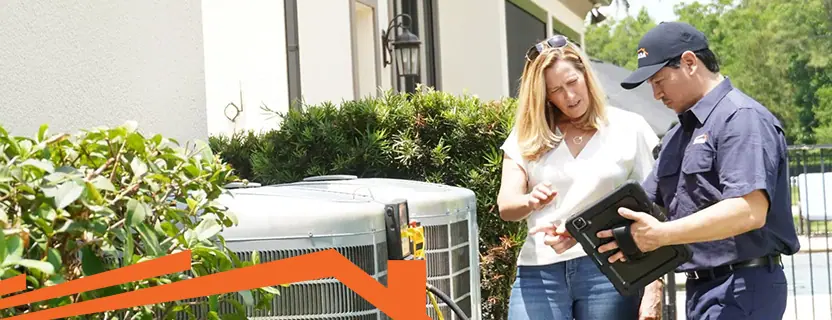
Having an air conditioner that isn’t cooling effectively or breaks down during a hot, humid day is not ideal. You can prevent these problems by creating an AC maintenance schedule. Making sure your system is well-maintained brings peace of mind, lower energy costs and a longer lifespan for your AC.
This guide provides a year-round timeline, tips to create an effective AC maintenance schedule and how to customize a schedule for your specific needs.
Your AC unit works hard to keep your home comfortable, especially during hot, humid summers. As such, your system needs care and attention to continue functioning optimally. Creating an AC maintenance schedule is essential for several reasons, including:
A general schedule is a great starting point, but the most effective plan will be tailored to your specific home and system. Some factors you need to consider when planning your AC maintenance schedule frequency and timing include:
Monthly tasks are the perfect place to start your maintenance schedule. They primarily include simple, DIY visual inspections and cleaning tasks to ensure optimal airflow and catch minor issues early.
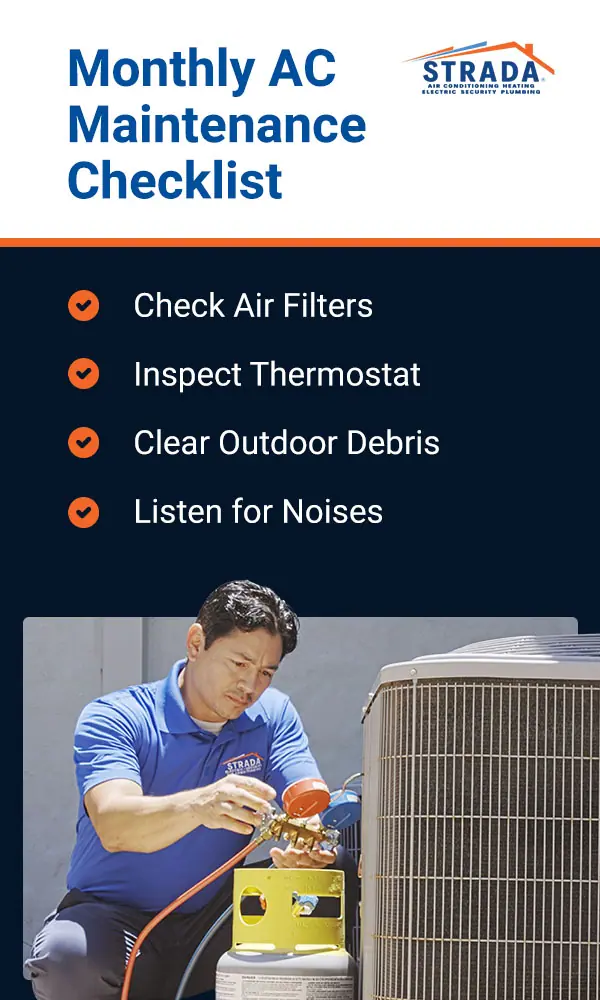
A dirty AC filter restricts airflow, making your unit work harder and increasing energy consumption. Plus, they can reduce your indoor air quality by allowing allergens and airborne contaminants to recirculate in your home.
Check your air filter for buildup monthly, especially during peak cooling season. Homes with pets, individuals with allergies or those who use the system frequently may require monthly AC filter replacements, while one to three months may be sufficient for others. If the filters look dirty, you should change them regardless of the time frame.
The thermostat is essentially the brain of your AC system. As part of your monthly maintenance, check your thermostat to verify that the settings are correct and that your system is operating as expected. If you don’t have one already, consider switching to a programmable or smart thermostat for improved efficiency and to prevent overworking your AC system.
If the thermostat uses batteries, check their charge and replace them as needed.
It’s crucial to keep your outdoor condenser unit clean to maintain proper airflow and efficiency. To ensure the area around the unit is clear, you must rake away or pull up any leaves, grass clippings, dirt or spiderwebs that have accumulated around the base of the unit. For nearby shrubs or bushes, trim them back so there is at least two feet of clear space around the unit to prevent any obstructions that can hinder airflow.
While it’s normal for your air conditioner to make a gentle humming sound, unusual noises can be a sign of potential problems. For example, a clicking sound can be normal when the AC is turning on or off. However, if the noise is repetitive or accompanied by the system shutting off afterwards, you may have a problem.
At least once a month, keep an ear out for unusual noises, such as banging, rattling or buzzing, to monitor your system’s performance.
The seasonal AC maintenance part of your schedule focuses on preparing your system for the extreme temperatures of summer and winter. As such, it is best to do maintenance in spring and fall. Performing these tasks at the right time is crucial for preventing seasonal-specific issues. Here’s what to include in your seasonal AC maintenance checklist:
Spring AC tuneups are the most crucial since your system is about to handle its heaviest workload. Maintenance during this time of the year, ideally before daily temperatures consistently hit high degrees, ensures the unit is ready for the stress of summer heat. This proactive check prevents a breakdown during hot weather when you need your AC the most.
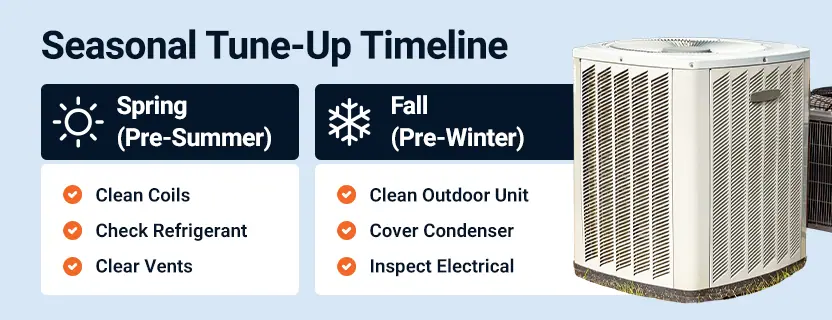
Creating a fall AC maintenance schedule is essential for properly shutting down your cooling system to protect it from harsh winter weather while it’s inactive.
While monthly and seasonal tasks are vital, a comprehensive professional service at least once a year is key to an effective maintenance plan. It provides a level of technical assessment and preventive care that goes beyond a DIY checklist. A professional AC maintenance service usually includes:
During the electrical system inspection, technicians test thermostats and capacitors to ensure they hold the correct electrical charge, check for corrosion on wiring and contacts and tighten all electrical connections to prevent safety hazards and component failure. Inspecting electrical systems ensures your unit starts, operates and stops as intended.
Professionals measure the precise refrigerant pressure in your system. An undercharged system indicates a leak. It will struggle to cool your home and can cause catastrophic damage to the compressor. Skilled technicians can identify and recommend repairs for any leaks found.
Dirt and debris naturally accumulate on various AC components, creating blockages that hinder performance. Technicians thoroughly clean and maintain various parts, including:
Moving parts within an AC system, such as motors, fans and bearings, generate friction during operation. During a professional maintenance service, technicians lubricate all moving parts to reduce friction and wear, prevent overheating, and ensure your systems run more quietly and smoothly.
After inspection and cleaning, the technician will conduct a comprehensive system evaluation to verify that every component is functioning as intended, from the thermostat’s initial call for cooling to the final shut-off.
They may also calibrate specific components, like adjusting thermostat settings or aligning the refrigerant charge with the manufacturer’s specifications. This part of the maintenance ensures both performance and safety controls are functioning correctly.
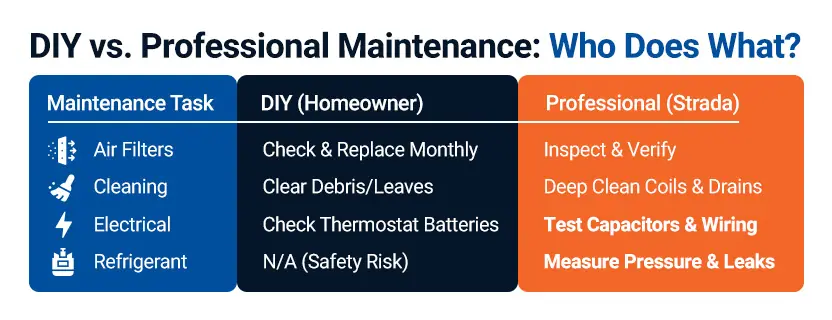
An effective maintenance plan involves a partnership between the homeowner and an expert HVAC technician. As a homeowner, you can handle simple, noninvasive tasks that don’t require specialized tools or technical training. A DIY preventive AC maintenance schedule for homeowners can include tasks such as changing air filters, clearing the outdoor condenser unit, checking the thermostat and inspecting condensate drains.
While some tasks are manageable for homeowners, others require skills and specialized equipment to ensure safety and proper service. Some of the tasks you should leave to trained technicians include system diagnostics, electrical and mechanical repairs, refrigerant management, and deep cleaning.
Explore some of the commonly asked questions about AC maintenance schedules:
At a minimum, you should schedule a professional AC tuneup once a year, ideally in the spring before the cooling season begins. If you have a heat pump that operates year-round or an older system, scheduling service twice a year, in the spring and fall, is recommended.
While you can do tasks like changing the air filter yourself, it’s best to hire a professional for more complex maintenance. Professionals have the tools, knowledge and experience to accurately diagnose and address potential issues.
Even when you regularly perform monthly and annual AC maintenance tasks, you should always be on the lookout for these warning signs:
The cost of AC maintenance varies depending on your location, the type of AC unit and the services included. Some HVAC companies offer AC maintenance plans that come at a fixed rate, so you know what to expect while saving on long-term costs.
When selecting an AC maintenance company, consider the following:
Creating and keeping up with a consistent maintenance schedule is the key to a reliable and efficient AC system. Finding a good balance between DIY tasks and professional service is also crucial. Fortunately, Strada Air Conditioning & Heating is here to help with all your professional maintenance service needs. As a family-owned and -operated company with decades of experience, we deliver unmatched expertise, personalized attention and customer care.
We offer Classic and Premium maintenance plans with unique benefits like priority scheduling, discounts and warranties. With our preventive maintenance service, you can save on potential repairs, extend your system’s lifespan and maintain the manufacturer’s warranty with documented service records.
Contact Strada Services today to learn more about our maintenance plans or schedule your professional tune up.

Joe Strada, owner of Strada Electric, Security & Air Conditioning, started working at the young age of 14. He’s never attended college, but he has spent his life dedicating his time and energy to his trade and providing high-quality services to his customers. At 19, Joe started working at a well-known air conditioning company and developing his commitment to excellence. He has state certifications in electric, plumbing, air conditioning, residential building and general contracting. During his years of training and experience, Joe noticed a sincere need for a dependable electrical contractor in Florida who embodied the same dedication to customer service in which he believed. In 2003, Joe co-founded Strada Electric, Security & Air Conditioning. Since then, the company has been in the business of providing peace of mind to customers. We offer expert electric, security and air conditioning solutions for homes and businesses, leveraging our experience to deliver professional and responsive service with reliability and respect.


 Pay Online